Autonomous transport on-demand
Published: 02.04.2025
Background
Even though the Oslo region has one of the best public transport systems in the world, many people feel they also need a private car to make their daily lives work.
The challenge with widespread private car use is that it is not sustainable, either for the region or for the planet. If more people are to be able to manage without a private car, public transport services must be expanded to include entirely new modes of travel that make it easier for people to choose not to use a car while still retaining flexibility.
On-demand transportation that picks you up
Ruter believes that a good alternative to private cars could be on-demand transport that picks you up where you are and takes you where you need to go. If the vehicle can also pick up several passengers on each trip, we can help reduce the number of vehicles on the roads in our region.
Ruter has already tested several types of ride-sharing-based on-demand transport, such as Age-friendly transport in several Oslo districts, Ride-sharing and Hent. The key to launching similar services on a large scale across the entire region is the use of self-driving vehicles. With self-driving vehicles, we can offer this type of transport and more flexible mobility options to many more of the region’s residents.
Pilot project in Groruddalen
Before we can deploy fleets of self-driving vehicles that pick you up on demand, we must first undertake thorough preparations together with government authorities and partners:
- We need to get the vehicles and technology in place and make sure everything works.
- We need to prepare Ruter’s organization and systems to manage fleets of self-driving vehicles.
- We need to develop a travel experience that feels safe, comfortable, and easy for everyone to use.
To lay the groundwork for this, we launched a pilot project involving autonomous vehicles in Groruddalen, Oslo, in 2023, together with our research and development partner Holo. The purpose of the pilot project is to establish and test a small-scale autonomous transport service and gain insights and experience from it.
The project will span several years. Our goal is to be ready, once the pilot project is complete, to launch shared, on-demand autonomous transport as a permanent addition to the public transport network in the Oslo region.
Questions and answers about the service
How many self-driving vehicles will Ruter test in Groruddalen?
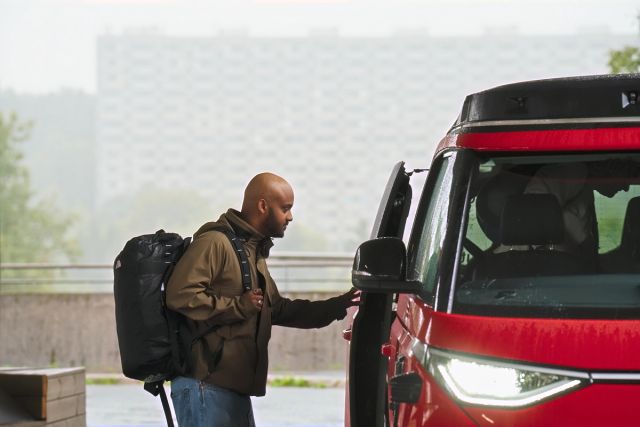
We started in late 2023 with five vehicles. These were NIO ES8 passenger cars. From autumn 2026, we will have six Volkswagen ID. Buzz vehicles. The vehicles are specially adapted for ride-sharing and are equipped with sensors and software that enable them to drive themselves.
Will the vehicles be completely unmanned?
At present, there is a safety operator in the driver's seat. The operator's role is to ensure that the vehicle and its systems are functioning properly. The plan is to eventually allow the vehicles to operate entirely without a driver as the technology matures and is adapted to the needs of our region.
How should the transportation service work?
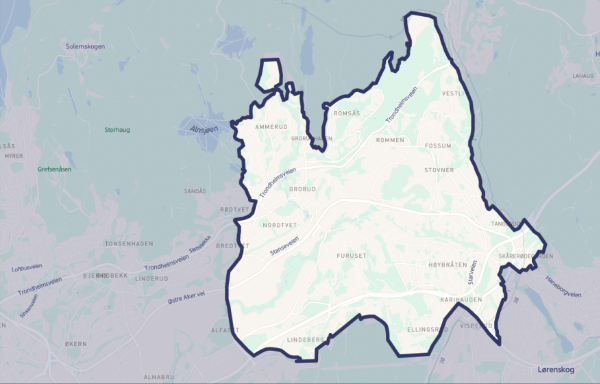
If you are within the designated area in Groruddalen and southern Lørenskog, you can book a ride using the Selvkjørende app, and one of the vehicles will pick you up near your location. If other people in the area have booked a ride in the same direction, they will be picked up along the way.
When will people be able to try it?
After several rounds of test runs, the service will open to passengers in September 2026. We welcome everyone aboard to try it out, give us feedback, and share ideas for future development. Learn more about how you can help test Selvkjørende here.
Won't it be a bit cramped sharing the back seat with other passengers?
The first five vehicles we will be using are designed like regular passenger cars. Some people may find it a little cramped to share the back seat with strangers. However, we will only use these vehicles at the very beginning to get the project up and running. The plan is to gradually introduce vehicles that are slightly larger and more spacious inside, making them better suited for use in public transport.
How much will it cost?
This has not yet been decided. Ruter will notify customers well in advance when a fee for the service is introduced.
What is the difference between Autopilot and Summon?
Hent is Ruter’s on-demand transport service with a driver. It is already fully operational and is currently used by passengers through the Ruter app. The self-driving pilot is based on the same core idea: you book transport that picks you up where you are and takes you where you need to go, when you need it. The difference is that the pilot is testing self-driving vehicles instead of vehicles with drivers. The aim is to explore how self-driving technology can make on-demand transport more accessible, cost-effective, and scalable in the future. Hent demonstrates how the service works today, while the self-driving pilot explores how a similar service could be provided once the technology is mature enough for wider deployment.
What are the learning objectives of the project?
The project will help generate insights, share experiences, and facilitate smart and inclusive mobility solutions for the future.
Through the project, we aim to:
- Establish collaboration to prepare Ruter, partners, suppliers, and public-sector stakeholders for the automated services of the future.
- Gain experience operating autonomous on-demand transportation services and understand how the technology works in practice.
- Experiment with customer journeys without human staff and test how such services can be user-friendly, safe, and efficient.
- Explore solutions to improve accessibility, particularly autonomous services for people with disabilities.
- Test payment models that make autonomous ride-booking services attractive and sustainable.
- Assess the need to adapt both physical and digital infrastructure for boarding and alighting in an autonomous transport system.
Har du flere spørsmål?
Do you have questions about Ruter's trial of autonomous vehicles? Feel free to contact us on social media, or send us an email.
We have created a dedicated website about our work with autonomous vehicles. This page is only available in English.