Universal design – how Ruter works with it
Published: 21.01.2026
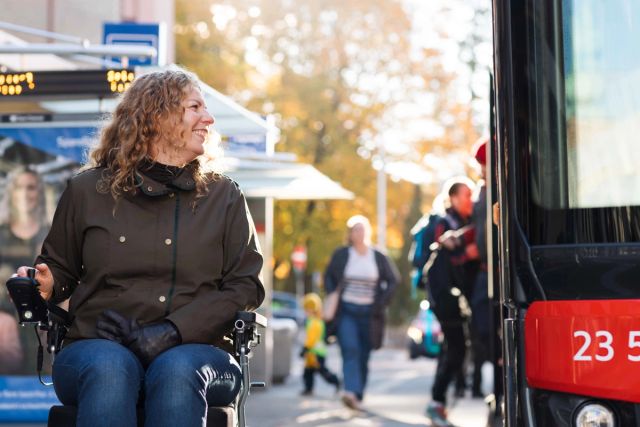
Everyone should be able to use public transport
Universal design in public transport means that everyone should be able to use public transport on an equal basis. To meet the needs of as many people as possible, the system must be planned around those who have the greatest requirements related to widths, lengths, gradients, and readability in the public transport system.
The work on universal design is extensive and time-consuming, both because it requires major investments and close cooperation with many stakeholders. This is a priority that we are working on systematically across the entire organization.
Cooperation with interest organizations
Dialogue with users and interest organizations is crucial for us. Through regular contact, we gain valuable insight into challenges and needs, and constructive feedback helps us improve.
Among various organizations, we collaborate with:
- Norwegian Association of the Disabled
- Association of the Blind
- The Hearing Association
- Mental health
- The Norwegian Federation of Organisations of Disabled People
- The Pensioners' Association
- The Central Council for the Elderly
- The Central Council for People with Disabilities.
Together with the City of Oslo, Akershus County, Sporveien and other partners, we are implementing concrete measures to make everyday life easier for all travelers.
Examples of initiatives we are working on
- Accessibility information in the app that provides a brief description of the current stop and any potential challenges. Currently published for bus and tram. We are working on providing the same information for the metro and boats.
- Continuous disruption informationon screens, banners, on ruter.no and in the Ruter app, with increased focus on clearly marking alternative routes. We also always have a phone number you can call for help during major disruptions, as well as customer service staff on site.
- Continuous maintenance and upgrading of existing infrastructure to make it universally designed/accessible.
- Increased lighting for safety at stops both in Oslo, but especially in Akershus.
- Standardization and improvement of standards that ensure everyone can use public transport across the different modes of operation. The goal here is that everything should feel more or less the same and, with that, hopefully more intuitive.
- Better design of vehiclessuch as step-free buses, trams and metro trains with dedicated areas for wheelchairs, external speakers and low floors. In recent years we have received a lot of new equipment here, such as new island boats, new trams and buses that are universally designed.
- New real-time displays that are easier to read for everyone and for screen readers.
- Cooperation between agencies that ensures that people with disabilities are increasingly able to move across different modes of operation and get to and from stops.
- Driver trainingthat ensures drivers increasingly know how to best help all Ruter customers equally.
- Ruter is working on new products and services that we hope will in the future ensure increased accessibility and universal design for public transport passengers.
All new employees participate in training on universal design
Everyone who is new to public transport – both at Ruter and as a driver – spends a day learning about universal design.
Mind the Gap is a course concept from Ruter and The Norwegian Association of Disabled. The initiative arose from a clear need:
To create a more holistic and inclusive customer experience – for everyone. It is about raising awareness and building competence regarding customers with disabilities and their stories when using public transport.
The course is led by facilitators who take participants out into the public transport system. There, among other things, they get to try boarding a bus in a wheelchair.
The evaluations we have carried out show that the course really hits the mark when it comes to giving drivers practical and relevant skills.