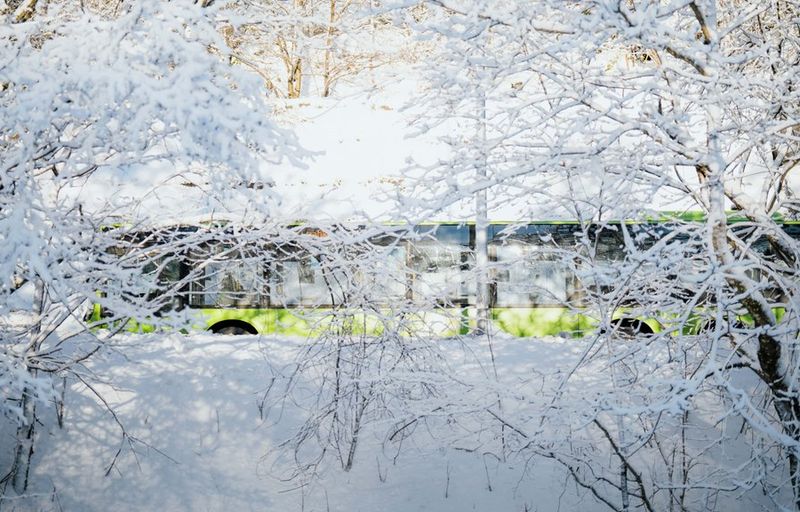
Buses in winter conditions: How we prepare—and what you need to know
Published: 10.11.2025
Is your bus running now? Check traffic status and disruptions.
How to check if the bus is running
You can find up-to-date information about your route in the Ruter app, in the journey planner, and on the service status page. There you can see whether your bus is running as normal, delayed, or cancelled.
- Check the journey planner in the app or at ruter.no before you leave, and keep an eye on real-time information along the way.
- Keep an eye on the weather forecast, and allow some extra time when snow or icy roads are expected.
- Consider alternative transportation. The metro, trams, and trains run on dedicated tracks and are often less affected by winter weather than buses.
- Dress for the conditions—on challenging winter days, you may have to wait longer than usual at the bus stop.
- Kick the snow off your shoes before boarding, and take care when getting on and off. Snow and slush make floors slippery on buses, trams, and the metro.
These routes are most vulnerable during snowfall
We operate 16,000 bus services every day. That is twice as many as trams and metro services combined. While rail transport runs on dedicated tracks, buses have to contend with regular traffic throughout their journeys. Our buses travel through narrow streets, up steep hills, and into every nook and cranny of our city. Some routes are also more exposed to winter weather than others. That is why we stay in close contact with road maintenance and snow-clearing crews, alerting them whenever snow needs to be cleared or roads need to be gritted.
Tamburveien (lines 30, 51, 56, 58)
The steep hill on Tamburveien in Nydalen becomes extremely slippery in winter. One measure is to pass the bus stop without stopping, allowing the bus to maintain its speed up the hill.
Hellerudgrenda (route 69)
Slippery roads may prevent the bus from stopping at four bus stops at the top of Hellerudgrenda.
Bjørnholt School (routes 71, 77)
Slimeveien in Bjørndal becomes extremely slippery in winter, and the hill is difficult for the bus to climb. In 2025, Ruter deployed a dedicated snowplow tractor to keep the route passable.
Skullerudbakken (route 76)
On icy days, route 76 may need to be diverted. This usually means that the bus will not stop at Skullerudkrysset or Skullerudbakken in the direction of Helsfyr.
Valhalla Road (route 81)
The hill up toward Tårnåsen on Valhallaveien is a known challenge in slippery conditions. Bus 81 may be diverted, and parts of the route may be suspended at times. As a result, the stops between Trygve Strømsbergs vei and Ødegården may not be served in the direction of Myrvoll station.
Nesøya (routes 265 + 265E)
Nesøya is an area where conditions change quickly, which can make it challenging to always time snow plowing and gritting correctly. Nesøya is given high priority, meaning that snowplows and gritting trucks make their rounds every three hours instead of every six hours (the standard for the municipal road network). Salt is not used on Nesøya due to environmental concerns. Buses only use studded tires on days with extremely poor weather conditions.
Blystadlia (route 300)
Route 300 depends on the roads being plowed and gritted during rush hour. The section between Kurlandsveien and Blystadlia is particularly prone to bus cancellations when driving conditions are difficult.
What you are entitled to if your bus is delayed due to snowy weather
If you are delayed due to snow and slippery conditions, you may have certain rights—but not in every case. Here’s what applies and what steps you can take next.
Travel guarantees: All scheduled services will operate, and there will always be room for you. The travel guarantee applies unless weather conditions are extraordinary. In the event of heavy snowfall, there are unfortunately many circumstances beyond our control at Ruter.
Learn more about Ruter's travel guarantee
Taxi reimbursement: If you are delayed by more than 20 minutes because our service is not running on schedule, you can apply for reimbursement of taxi expenses (up to NOK 750). Extraordinary snowfall is also excluded here.
See how you can get a taxi fare refund from Ruter
Let us know: Were you unable to get through, or did you experience something that wasn't right?
How we have prepared for winter
We work with bus operators, road authorities, and snow-clearing crews on a joint winter plan. The goal is to keep public transport running as normally as possible, even on challenging winter days.
- The drivers have taken refresher courses in driving on slippery roads and fitting snow chains.
- Ruter has mapped out alternative routes and secured additional vehicles and staffing from the operators.
- The snow-clearing crew has increased its capacity by adding more snowplows.
- The Information and Coordination Center (IOSS) closely monitors the traffic situation and can reallocate means of transport as needed.
- The electric buses have been equipped with auxiliary heaters that run on biodiesel, improved charging infrastructure, and updated traction control software, reducing the impact of cold weather on their range.
- Ruter holds operational meetings with operators and snow-clearing crews as soon as a yellow weather warning is issued, and has detailed measures in place down to street level—so that an entire route does not have to be suspended because of local problems.
Questions and answers about public transport in winter conditions
What does Ruter do to avoid delays when there is a lot of snow?
The Information and Coordination Centre (IOSS) is closely monitoring the traffic situation and can reallocate vehicles as needed. At the same time, we are doing everything we can to keep our customers informed through the journey planner, real-time updates, ruter.no and social media.
We cover a large area with a variety of challenges, so we have prepared different measures for different routes. For example, we may deploy a bus fitted with snow chains on a route that experience has shown to be challenging, while the regular bus takes a different, more easily accessible route.
Do the buses have snow chains?
Yes, buses are legally required to carry snow chains.
Whether snow chains should and can be used depends on the situation. Fitting snow chains takes time, and because it is so time-consuming, the bus service is often canceled before the driver has managed to fit all the chains.
During heavy snowfall and when roads have not been plowed, other vehicles may become stranded and block the bus route. In such cases, snow chains alone do not solve the problem.
How do we ensure that electric buses work well in winter?
The bus operators have implemented many measures in this area. Many of the buses have been fitted with auxiliary heaters that run on biodiesel. This gives the buses a significantly longer range because they do not have to use battery power for heating.
Charging infrastructure has undergone major upgrades in recent years, giving buses access to more and better chargers. Many buses have also received software updates to improve traction control.
What is Ruter doing to ensure that wheelchair ramps on buses work during the winter?
Ruter works systematically to ensure that wheelchair ramps function properly during winter through a range of measures. All buses are subject to contractual requirements stipulating that ramps must work in Nordic climates, including snow and winter weather. Operators have established procedures for inspecting and cleaning ramps during the winter season. This includes functional testing as part of periodic maintenance and daily cleaning, which is often carried out at night, although some operators also clean during the day. Ruter conducts spot checks and maintains an ongoing dialogue with operators about the challenges of winter operations. Drivers receive mandatory training in the use of ramps, and buses can be replaced while in service in the event of technical faults. If a wheelchair user is unable to board due to a ramp malfunction, alternative transport (a taxi) must be arranged through the driver as soon as possible.
How are responsibilities divided between Ruter and the bus companies?
Ruter manages public transport in Oslo and Akershus. This means that, among other things, we plan the routes and sell the tickets. Passengers can call Ruter’s customer service if they need help.
The people who drive the buses are employed by the bus companies. It is these companies and, ultimately, each individual driver who bear the primary responsibility for assessing whether it is safe to drive.
Does the travel guarantee apply when delays are caused by winter weather?
The travel guarantee applies if you are delayed by more than 20 minutes because our service is not running on schedule, but not if the delay is caused by circumstances beyond Ruter's control. Examples include extreme weather conditions such as strong winds, heavy rain and heavy snowfall, or disruptions or circumstances that we have informed you about in advance. Read more about the travel guarantee here.